
Yes, comprehensive coverage usually helps cover vehicle theft and damage caused by break-ins, but it does not automatically cover every loss connected to stolen personal belongings inside the car. It is the part of an auto policy that generally applies to non-collision losses like theft, vandalism, broken windows, and
A Business Owner’s Policy, or BOP, is often a practical starting point for small to midsize businesses that need core protection without building a custom insurance program from scratch. It typically bundles general liability and commercial property coverage, and may also include business interruption protection depend
Universal life and whole life are both forms of permanent life insurance, but they are built differently. Whole life is generally more structured and predictable, while universal life usually offers more flexibility in premiums and policy design.
Auto liability insurance helps pay for injuries and property damage you cause to other people in an accident, but having some liability coverage is not the same thing as having enough. The real question is whether your current limits could handle a serious crash without exposing your savings, income, or future assets.
Home insurance myths can lead homeowners to underinsure the property, misunderstand what is actually covered, or delay fixing problems until a claim is denied or limited. The most expensive mistakes usually come from assuming the policy is broader, simpler, or more automatic than it really is. For many homeowners in St
Business insurance supports long-term growth by protecting cash flow, stabilizing operations after setbacks, and helping companies qualify for better contracts, loans, and partnerships. In our years of professional service, we’ve found that businesses grow faster—and with less disruption—when their insurance program is built proactively around real risks, not just minimum requirements. Growth is exciting, but it also increases exposure. More customers, more employees, more equipment, more vehicles, and bigger contracts all create more ways a single incident can cause financial damage. A lawsuit, a property loss, a cyber event, or a serious injury can drain cash and derail momentum right when a company is scaling. The purpose of business insurance isn’t to slow growth with paperwork—it’s to make growth resilient. For business owners in Star, ID, where many companies scale by adding service areas, hiring, upgrading equipment, or moving into larger facilities, insurance is often the difference between “a temporary setback” and “a lasting financial hit.” This guide explains the practical ways business insurance supports long-term growth, the coverages that matter most, and how to structure protection so you can expand with confidence. Why growth increases risk (and why insurance becomes more valuable) As a business grows, risk doesn’t rise in a straight line—it multiplies. More activity means more chances for something to go wrong. Growth-related risk multipliers include: More customer interactions (more liability exposure) More staff (more employment-related and injury exposure) More assets (more property and equipment exposure) More revenue (higher business interruption impact) More vendors and subcontractors (contract and certificate risk) More data and digital activity (higher cyber exposure) More travel and deliveries (higher auto exposure) Many business owners think insurance is something you “get once.” In reality, insurance is a living part of the business strategy that should evolve as operations expand. Business insurance supports growth in four practical ways 1.Protecting cash flow after a loss Cash flow is the lifeblood of growth. Even a profitable company can struggle if a loss forces large, unexpected expenses. Insurance can help stabilize cash flow by covering: Liability claims and legal defense (general liability) Property damage (commercial property coverage) Income loss during shutdowns (business interruption) Damage to tools or equipment (inland marine/equipment coverage) Auto accidents involving company vehicles (commercial auto) Without these protections, growth capital can be redirected to crisis spending—slowing hiring, delaying expansion, or forcing debt. 2.Keeping operations running (business continuity) Many companies can survive a small setback. Larger disruptions—fire, storm damage, major theft, water loss, equipment failure—create operational downtime. A strong insurance program supports continuity through: Business interruption coverage (replaces lost income during a covered interruption, subject to terms) Extra expense coverage (pays for costs to keep operating, like temporary space or expedited shipping) Equipment breakdown coverage (helps repair/replace key systems, policy-specific) Supply chain and dependency planning (often risk-managed through coverage and operational controls) Businesses that serve customers across communities and commute corridors often have schedules that depend on reliable access to facilities and equipment. A disruption near busy routes leading toward Eagle Road can quickly create missed appointments and reputational damage. Coverage that funds a faster return to operations is a growth advantage, not just a safety measure. 3.Qualifying for better contracts and partnerships As businesses grow, they compete for higher-value clients—commercial accounts, municipal work, vendor partnerships, and larger projects. Many of these opportunities require specific insurance terms. Insurance can help you win work by meeting requirements such as: Specific general liability limits (often $1M/$2M or higher) Additional insured endorsements Waiver of subrogation Primary and noncontributory wording Workers’ compensation coverage Commercial auto coverage with specific limits Umbrella liability for higher-risk contracts Professional liability or E&O for advisory/design work (when applicable) The “cost of being underinsured” isn’t just claims—it’s lost opportunities. We’ve seen businesses lose jobs because they couldn’t provide correct certificates or endorsements in time. 4.Supporting smarter risk-taking (confidence to invest and hire) Growth requires decisions: hiring staff, purchasing vehicles, leasing a building, investing in inventory, or launching a new service. Insurance helps you take those steps with controlled downside. When insurance is structured well, it can: Protect new assets as you acquire them Reduce the impact of employee injuries or customer incidents Shield the owner’s personal finances from business claims (though business structure and legal steps matter too) Make lenders and landlords more comfortable with your business Provide a clearer financial plan for “what if something happens?” In our years of professional service, we’ve found that owners with strong protection are more willing to invest in scaling because one bad week is less likely to undo years of progress. Core business coverages that support long-term growth Not every business needs every policy, but growth-oriented programs often include these foundations: General liability (GL) Protects against third-party claims of: Bodil y injury Property damage Personal/advertising injury (policy-specific) Includes legal d efense for covered claims. Business Owners Policy (BOP) Often bundles: Gener al liability Commercial property May include option s for business interruption and common endorsements. Commercial property Protects your building (if owned) and business contents (equipment, inventory, furnishings), subject to terms. Business interruption / extra expense Helps cover income loss and additional costs during a covered interruption. Workers’ compensation (where applicable) Helps cover employee injuries and related medical/lost wage costs, subject to state rules and policy terms. Commercial auto Protects vehicles used for business, and the liability exposures associated with them. Professional liability / E&O (when relevant) Important for businesses that provide advice, design, consulting, or specialized professional services. Cyber liability (increasingly essential) Helps with costs associated with: Data b reaches Cyber extortion Incident response and notification Business interruption from cyber events (policy-specific) Umbrella liability Adds an extra layer of liability limits above underlying policies (GL, auto, etc.), subject to policy terms. Common coverage gaps that hurt growing businesses Growth often outpaces insurance updates. The most common gaps we see include: New se rvices added but not disclosed to the insurer Coverage can be affected if the business class changes. Underinsured property values Equipment and inventory grow, but policy limits remain the same. Missing business interruption coverage Owners focus on physical assets but forget income exposure. Employees using personal vehicles for work without coverage alignment Hired/non-owned auto liability may be needed. Subcontractors without verified insurance Claims become messy when contracts and certificates are not managed. No cyber protection despite growing digital operations Liability limits too low for bigger contracts Any time revenue, payroll, vehicles, or equipment increases meaningfully, it’s time to review the program. Small changes can prevent big gaps. A simple annual insurance review checklist for growth To keep your coverage aligned as the business expands, review these items at least annually (or after major changes): Revenu e and payroll updated New hires and job roles reflected accurately New locations, leased spaces, or property changes added Equipment and inventory values updated Vehicle list and drivers updated New services or subcontractor relationships disclosed Contract requirements reviewed (COIs, endorsements, limits) Cyber exposure reviewed (data, systems, payment processes) Liability limits evaluated against new contract sizes Business interruption coverage reviewed against real monthly expenses Growing businesses near Star Riverwalk Park often expand by adding service vehicles, hiring crews, and taking on larger projects. Those changes may look operational on the surface, but they also change insurance needs—especially auto, workers’ comp, and liability limits. Conclusion Business insurance supports long-term growth by protecting cash flow, keeping operations resilient after setbacks, and helping companies qualify for bigger opportunities through contract-ready coverage. As businesses grow, risks multiply—so the smartest approach is proactive: adjust limits, add key protections, and close gaps before they cause disruption. In our years of professional service, we’ve found that a well-built insurance program doesn’t just respond to problems—it enables confident expansion by reducing the financial consequences of the unexpected. For business owners in Star, ID, the right coverage is a growth tool that helps you hire, invest, and scale with stability. At Beacon Light Insurance, we put our clients first by helping them find reliable insurance coverage that fits their needs and budget. Insurance is an essential part of protecting what matters most, and our experienced team is here to guide you every step of the way. To learn more about our products and services, call us at (208) 820-2880 or request a free, no-obligation quote by Clicking Here . Disclaimer: The information provided in this blog is for general informational purposes only and does not constitute professional insurance advice. Coverage options and requirements can vary based on individual circumstances. For personalized recommendations, please consult a licensed insurance agent or qualified professional who can help you make informed decisions based on your specific needs. Beacon Light Insurance Star, ID (208) 820-2880 https://www.beaconlight-insurance.com/

Securing your family’s financial future starts with protecting income, controlling major risks, and building a plan that keeps your household stable through emergencies, illness, accidents, and unexpected loss. In our years of professional service, we’ve found the most effective approach is layered coverage—life, disability, health, home, auto, and liability—organized around the family’s actual expenses and responsibilities. Families don’t get into financial trouble because of one small mistake. It usually happens when a major life event collides with a lack of protection: a serious illness, an injury that prevents work, a car accident with high liability exposure, a home loss, or the death of a primary earner. Insurance exists for these “big impact” moments. When coverage is structured thoughtfully, it provides time, money, and stability—so your family can make decisions from a position of strength rather than panic. For households in Star, ID, where families often balance mortgages, commuting costs, childcare, and long-term goals like education or retirement, the financial future is protected best when you focus on the risks that can derail everything quickly. This guide breaks down the core coverage types that support family stability, how to prioritize them, and the practical steps to build a plan that fits your budget. Start with the foundation: know what you’re protecting Insurance planning works best when it’s tied to real numbers and real responsibilities. Before you shop, list: Monthly essentials Housing, utilities, food, transportation, childcare, debt payments Income sources Who earns what, and how steady that income is Dependents and caregiving responsibilities Children, aging parents, or family members who rely on you Assets you need to protect Home, vehicles, savings, business equipment The “must not fail” commitments Mortgage, school costs, medical needs, business obligations The goal is not to buy every policy available. The goal is to protect the income and assets your family cannot afford to lose. Layer 1: Protect the paycheck (disability and health coverage) For most working families, income is the engine behind everything. If income stops, the ripple effect can be immediate. Disability insurance: the often-missed cornerstone Disability coverage helps replace part of your income if you cannot work due to illness or injury. Why it matters: A disability event is often more likely than people assume Bills continue even when paychecks pause Recovery can take months or longer Key choices include: Short-term vs. long-term disability Elimination period (how long before benefits begin) Benefit amount (how much income is replaced) Definition of disability (how disability is determined) Health insurance: controlling the cost of care Health coverage reduces the financial shock of: Emergencies and hospitalizations Ongoing prescriptions and chronic care Surgery, rehab, and specialist treatment Practical planning tip: Use your plan’s out-of-pocket maximum as a budgeting anchor Keep an emergency fund that can cover at least your deductible (ideally more) In our years of professional service, we’ve found that protecting income and managing medical cost exposure are the two most important moves families can make early. Layer 2: Protect the family if the worst happens (life insurance) Life insurance is about replacing the financial role a person plays in the household. It provides cash that can stabilize the family during a difficult time. Common reasons families buy life insurance: Replace lost income for a surviving spouse/partner Pay off a mortgage and reduce housing insecurity Fund childcare and education Cover final expenses Reduce debt burden and protect savings How to estimate how much life insurance you need A simple method: Add major obligations (mortgage, debts, education goals) Add 10–20 years of income replacement (based on your family’s needs) Subtract existing savings and employer-provided coverage Term vs. permanent Term coverage is often the most cost-effective way to protect income during working years Permanent coverage may fit lifelong needs or specific planning goals Many families benefit from term life as the “big protection” layer during the years when kids are young and debt is highest. Layer 3: Protect the home and property you rely on Your home is often a family’s largest asset—and also their stability hub. Proper homeowners coverage ensures a loss doesn’t become a long-term financial setback. Key elements to review: Dwelling limit aligned to rebuild cost (not market value) Deductibles you can afford Other structures for sheds, fences, and detached garages Personal property limits and replacement cost options Loss of use coverage for temporary housing after a loss Endorsements for common gaps (water backup, equipment breakdown, service line) Families who spend weekends near Star Riverwalk Park or run errands through growing residential areas often invest steadily in home improvements and outdoor upgrades. Those updates are great for comfort and value—but they should be reflected in your coverage so a loss doesn’t force you to rebuild “on a smaller budget” than your home actually requires. Layer 4: Protect against auto-related financial shocks Auto accidents are a common trigger for major claims, especially when injuries are involved. A strong auto policy protects both your vehicle and your financial future. Key protections to consider: Liability limits that reflect modern claim costs Uninsured/Underinsured Motorist coverage (where applicable) Collision and comprehensive coverage aligned to vehicle value Medical payments coverage (if available and appropriate) GAP coverage for financed or leased vehicles (where applicable) In our years of professional service, we’ve found that higher liability limits often provide the best “cost-to-protection” value because they guard against the most financially severe outcomes. Layer 5: Liability protection (the safety net around everything) Liability claims can put savings, wages, and assets at risk. Liability coverage exists across multiple policies, but the limits should match your exposure. Where liability coverage typically lives: Homeowners policy personal liability Auto policy liability Umbrella liability policy (additional protection above underlying limits) Umbrella coverage can be especially useful when: You have significant assets or income to protect You host guests frequently You have teen drivers in the household You have higher-risk exposures (pets, pools, frequent travel) Layer 6: Add targeted protection for specific risks After the core layers are in place, families often consider focused coverage where it adds real value. Examples include: Critical illness coverage (cash support after certain diagnoses, policy-specific) Accident insurance (helps with injury-related costs, policy-specific) Hospital indemnity coverage (fixed cash benefits for hospital stays, policy-specific) Identity theft protection (varies by insurer) Supplemental coverage works best when it fills a known gap—such as a high deductible health plan or limited sick leave—not when it’s purchased without a clear purpose. A practical step-by-step plan to secure your family’s future If you want a simple roadmap, use this sequence: Calculate your monthly “must-pay” expenses Build emergency savings to cover at least one deductible event Confirm health coverage and out-of-pocket maximum Add disability protection to defend the paycheck Add life insurance to protect dependents and housing stability Review home and auto limits for realistic rebuilding and liability protection Consider umbrella liability if assets/income justify it Update the plan annually or after major life changes When to review your coverage Your coverage should be reviewed when: You buy or sell a home You renovate or add structures You have a child or adopt You change jobs or income changes significantly You buy a new vehicle or add a teen driver You start a business or side gig You acquire valuables or major assets For families in Star, ID, this review habit is one of the simplest ways to keep your financial safety net aligned as life changes—without constantly “shopping” for insurance. Conclusion Securing your family’s financial future is less about one perfect policy and more about building a layered safety net: health insurance to control medical costs, disability coverage to protect income, life insurance to protect dependents, strong home and auto policies to protect assets, and liability coverage to shield what you’ve built. In our years of professional service, we’ve found that families who prioritize paycheck protection and realistic liability limits are better prepared for the events that can cause lasting financial harm. For households in Star, ID, a structured coverage plan provides stability, flexibility, and peace of mind—so your family can keep moving forward even when life takes an unexpected turn. At Beacon Light Insurance, we put our clients first by helping them find reliable insurance coverage that fits their needs and budget. Insurance is an essential part of protecting what matters most, and our experienced team is here to guide you every step of the way. To learn more about our products and services, call us at (208) 820-2880 or request a free, no-obligation quote by Clicking Here . Disclaimer: The information provided in this blog is for general informational purposes only and does not constitute professional insurance advice. Coverage options and requirements can vary based on individual circumstances. For personalized recommendations, please consult a licensed insurance agent or qualified professional who can help you make informed decisions based on your specific needs. Beacon Light Insurance Star, ID (208) 820-2880 https://www.beaconlight-insurance.com/
Home insurance becomes outdated when your coverage limits, endorsements, and policy details no longer match your home’s current rebuild cost, upgrades, or risk profile—leaving you exposed to large out-of-pocket losses after a claim. In our years of professional service, we’ve found that most coverage gaps come from lif
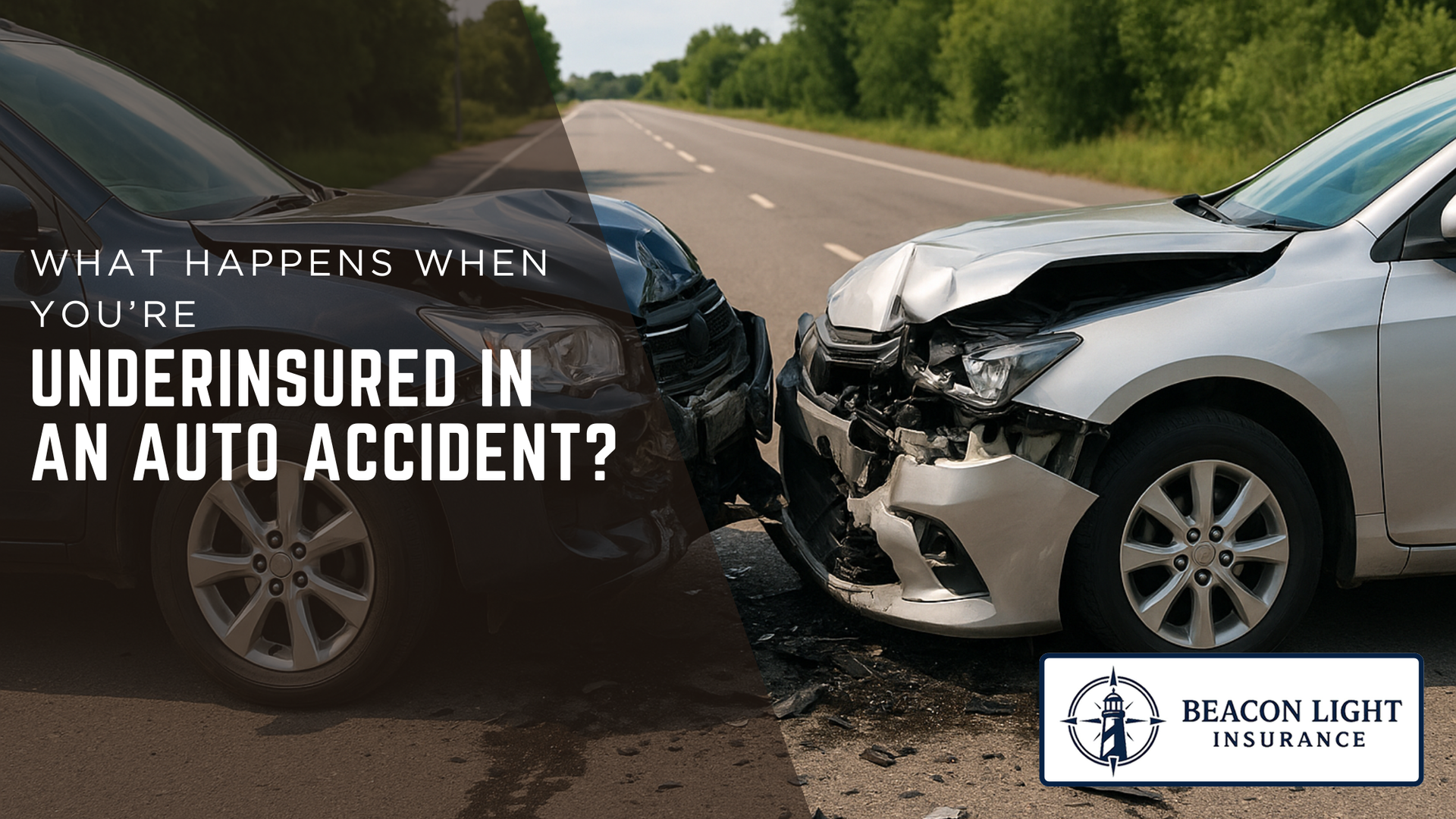
If you’re underinsured in an auto accident, your policy may run out before the bills do—leaving you responsible for the remaining medical costs, vehicle damage, lost wages, or legal claims. In our years of professional service, we’ve found the most damaging part of underinsurance isn’t just the accident itself, but the financial aftershocks that follow when coverage limits don’t match real-world costs. Being “underinsured” means your insurance limits are too low to fully cover the damages from a serious crash. That can apply to liability coverage (what you pay if you cause an accident) and to your protection when someone else hits you but doesn’t have enough insurance. In Star, ID, many drivers choose limits that feel “good enough” based on monthly price—until a high-cost accident reveals how quickly modern claims can exceed those limits. Below is what underinsurance looks like in real life, how the gap shows up after a crash, and what you can do now to prevent a painful surprise later. How underinsurance shows up after a crash Most people don’t discover they’re underinsured at the moment of impact. It becomes clear days or weeks later, when costs start stacking up and the insurer explains what your policy will (and won’t) pay. Common signs you’re underinsured include: Your liability limit is lower than the damage you caused. Your medical bills exceed the coverage available under the at-fault driver’s policy. You face multiple injured parties in one accident and your per-accident cap is not enough. You have vehicle damage but your coverage doesn’t match replacement or repair realities. You are sued and your policy limits don’t cover the full settlement or judgment. Underinsurance is especially risky in crashes involving injuries. Medical costs can rise quickly with ambulance transport, imaging, surgery, rehab, and follow-up care. Even a “moderate” injury can lead to extended physical therapy or time away from work. Scenario 1: You cause the accident and your liability limits run out If you are at fault and the damages exceed your liability limits, your policy pays up to your limit and you may owe the rest. This can include: Other drivers’ medical bills Passengers’ injury claims Property damage (vehicles, fences, storefronts, homes) Lost wages or diminished earning capacity claims Pain-and-suffering claims (where applicable) Legal costs beyond what your policy provides (policy-specific) Why this matters: A single accident can involve multiple vehicles and multiple injured people. Even if you carry what feels like a “normal” limit, it may not be enough when several claims hit at once. In our years of professional service, we’ve seen the worst underinsurance outcomes occur when drivers assume “I’m a careful driver” equals “I’m financially safe.” Careful driving helps, but it doesn’t eliminate the possibility of one severe accident. Scenario 2: Someone hits you, but they don’t have enough insurance This is one of the most frustrating situations: the accident isn’t your fault, yet you still face financial exposure because the other driver’s policy is too small (or sometimes nonexistent). This is where Uninsured/Underinsured Motorist coverage (UM/UIM) may apply, depending on your policy and state rules: Uninsured Motorist (UM): helps when the at-fault driver has no insurance. Underinsured Motorist (UIM): helps when the at-fault driver’s limits are too low to cover your losses. What UIM may help cover (policy-specific): Medical bills and ongoing treatment Lost income from time off work Pain and suffering, depending on the policy structure and jurisdiction Important detail: UIM typically doesn’t magically make you “whole.” It has its own limits. If your UIM limit is low, you can still end up paying out of pocket after a serious injury claim. Scenario 3: Your vehicle is totaled and your coverage doesn’t match what you owe Being underinsured can also mean your physical damage coverage doesn’t protect you from a gap between what your car is worth and what you still owe. Two common gap issues: Actual Cash Value (ACV) vs. what you owe: If you finance or lease, the settlement may be less than the remaining loan/lease balance. Replacement reality: Even if you own the vehicle outright, replacing it can cost more than expected due to market changes, taxes, fees, and availability. This is why GAP coverage (when applicable) is often discussed for financed or leased vehicles. It may help cover the difference between the ACV settlement and the loan/lease payoff, depending on the product terms. Why underinsurance becomes a long-term financial problem Underinsurance can follow you long after the vehicles are repaired. Potential long-term impacts: Using savings to cover medical costs or settlement gaps Taking on debt to replace a vehicle or pay bills during recovery Wage garnishment or payment plans after a lawsuit (in extreme cases) Higher future insurance costs after a major claim Reduced financial stability during a period when life is already stressful In practical terms, underinsurance turns a single event into an ongoing budget crisis—especially for families with fixed costs like housing, childcare, and existing debt. How to prevent underinsurance (without overpaying) The goal isn’t to buy the most expensive policy . The goal is to buy limits that reflect modern claim costs and the financial risk you’re actually carrying. A practical way to evaluate your liability limits Ask yourself: If I caused a serious injury accident, could my current limit cover a realistic medical and legal outcome? If I hit multiple vehicles, would my property damage limit cover repairs and replacement costs? If I was sued beyond my policy limits, what assets or income could be exposed? Coverage options that commonly close gaps: Higher bodily injury and property damage liability limits UM/UIM coverage that matches your liability limits (when available/appropriate) Medical payments coverage (if available) to help with immediate medical costs GAP coverage for financed/leased vehicles (where applicable) An umbrella policy for broader liability protection (if your assets/income justify it) In our years of professional service, we’ve found that the “best value” often comes from optimizing limits and adding key protections—rather than focusing only on the lowest premium. Why this matters for everyday driving Even a normal day—school drop-offs, errands, commuting, weekend traffic—can expose you to high-cost outcomes when road conditions change quickly. Areas near Star Riverwalk Park and routes that flow toward Eagle Island State Park can see a mix of local traffic, visitors, cyclists, and changing speeds. The more variables on the road, the more important it becomes to carry coverage that can absorb a worst-case scenario, not just a minor fender bender. For drivers in Star, ID, this planning is especially important because a major accident doesn’t just create repair bills—it can interrupt work, require travel for treatment, and force unexpected household decisions during recovery. What to do if you discover you’re underinsured after an accident If a crash has already happened and you suspect underinsurance, take these steps promptly: Request a full copy of your policy declarations page and confirm your limits. Ask your insurer what coverages may apply (liability, collision, UM/UIM, medical payments). Document all expenses: medical bills, prescriptions, mileage, lost wages, and repair estimates. Avoid signing releases too early if injuries are still developing. If there’s a serious injury or complex liability dispute, consider professional guidance to understand options and timelines. The most important thing is clarity: understand what’s covered, what’s capped, and where the remaining exposure may fall. Conclusion Being underinsured in an auto accident usually means your policy limits run out before the real costs do—leaving you responsible for medical bills, vehicle expenses, and liability gaps that can derail your finances. The best prevention is aligning your liability limits with modern claim realities, strengthening UM/UIM protection, and adding gap-closing options when needed. In our years of professional service, we’ve found that a simple coverage review today can prevent years of financial stress tomorrow—especially for drivers in Star, ID who want dependable protection for their families and assets. At Beacon Light Insurance, we put our clients first by helping them find reliable insurance coverage that fits their needs and budget. Insurance is an essential part of protecting what matters most, and our experienced team is here to guide you every step of the way. To learn more about our products and services, call us at (208) 820-2880 or request a free, no-obligation quote by Clicking Here . Disclaimer: The information provided in this blog is for general informational purposes only and does not constitute professional insurance advice. Coverage options and requirements can vary based on individual circumstances. For personalized recommendations, please consult a licensed insurance agent or qualified professional who can help you make informed decisions based on your specific needs. Beacon Light Insurance Star, ID (208) 820-2880 https://www.beaconlight-insurance.com/
Business insuranc e protects companies from financial losses caused by accidents, lawsuits, property damage, and unexpected disruptions. Every business—regardless of size or industry—faces risks that can threaten operations without proper coverage. In our years of professional service supporting business owners in Star, Id, we’ve seen how the right insurance transforms major setbacks into manageable challenges. Why Business Insurance Is Essential Running a business always involves risk. Even well-managed operations can face unexpected events that result in costly claims or interruptions. Business insurance exists to transfer these risks away from the business owner and onto an insurer, helping preserve cash flow and long-term stability. Without adequate coverage, a single incident can jeopardize years of hard work. The Most Common Risks Businesses Face While risks vary by industry, many exposures are shared across businesses. Everyday Risks That Affect Most Businesses Common risks include: Customer injuries on premises Property damage from fire or storms Lawsuits alleging negligence Theft or vandalism Temporary shutdowns after covered losses In our professional experience, these risks often arise from routine operations—not rare or extreme circumstances. General Liability Insurance: The Foundation of Protection General liability insurance is one of the most important policies for any business. What General Liability Typically Covers This coverage may help protect against: Bodily injury to customers or visitors Property damage caused by business operations Legal defense costs Settlements or court judgments For example, if a customer slips and falls inside your business, general liability coverage can help cover medical expenses and legal costs. Commercial Property Insurance: Protecting Physical Assets Business property represents a significant investment. What Commercial Property Insurance Covers This policy typically protects: Buildings owned by the business Equipment and machinery Inventory and supplies Furniture and fixtures Covered losses often include fire, theft, vandalism, and certain weather-related events. Without this coverage , replacing damaged property can be financially devastating. Business Interruption Insurance: Covering Lost Income Property damage often leads to downtime. Why Business Interruption Coverage Matters Business interruption insurance may help: Replace lost income during temporary closures Cover ongoing expenses like rent and payroll Support recovery while repairs are made In growing communities with local commerce near areas like the Boise River Greenbelt or Eagle Island State Park, even short interruptions can result in lost customers and revenue. Professional Liability Insurance: Errors and Omissions Some risks involve services rather than physical damage. When Professional Liability Applies Also known as errors and omissions insurance, this coverage may help if a client alleges: Negligent advice Professional mistakes Failure to deliver promised services Even unfounded claims can be expensive to defend without proper coverage. Commercial Auto Insurance: Managing Road Risks Many businesses rely on vehicles. Why Personal Auto Insurance Isn’t Enough Commercial auto insurance may be necessary if: Vehicles are owned or leased by the business Employees drive for work purposes Tools or materials are transported This coverage helps address liability, vehicle damage, and legal expenses related to business driving. Workers’ Compensation Insurance: Protecting Employees and Employers Employee injuries are a major exposure for many businesses. What Workers’ Compensation Typically Covers Workers’ compensation insurance generally provides: Medical care for work-related injuries Partial wage replacement Protection for employers against certain lawsuits In physically demanding roles, this coverage is often required and critical to maintaining compliance and employee trust. Cyber Liability Insurance: A Growing Concern Digital risks affect businesses of all sizes. Why Cyber Coverage Is Increasingly Important Cyber liability insurance may help with: Data breach response costs Customer notification expenses Legal claims related to data exposure Business interruption from cyber events Even small businesses with basic customer data face exposure in today’s digital environment. How Insurance Protects Business Owners Personally Business insurance doesn’t just protect the company—it can protect the owner. Financial Consequences Without Coverage Without adequate insurance, owners may face: Out-of-pocket legal defense costs Personal asset exposure Business closure after major losses In Star, Id, we’ve seen businesses survive serious claims specifically because insurance absorbed costs that would have otherwise been overwhelming. Common Coverage Gaps Businesses Overlook Many businesses are underinsured without realizing it. Frequent Gaps We Encounter These often include: Insufficient liability limits Missing business interruption coverage No cyber liability protection Using personal auto insurance for business vehicles Gaps typically surface only after a claim is denied or limited. How Coverage Needs Change as a Business Grows Insurance should evolve alongside operations. When to Review Business Insurance Reviews are especially important when: Hiring employees Expanding services Purchasing equipment Moving locations In Star, ID, businesses that review coverage annually are far less likely to face uninsured losses during growth. Industry-Specific Risks Matter No two businesses face identical risks. Why Customization Is Important Coverage should reflect: Industry type Customer interaction level Revenue size Physical vs. service-based operations Tailored insurance protects more effectively than one-size-fits-all policies. Business Insurance as a Long-Term Strategy Insurance is not just a compliance requirement—it’s a strategic tool that supports resilience, credibility, and continuity. Well-insured businesses are better positioned to recover quickly and maintain trust with customers, employees, and partners. Protecting Your Business with Confidence Every business faces risk, but not every business is properly protected. Understanding common exposures and how insurance responds allows owners to make informed decisions that safeguard their livelihood. At Beacon Light Insurance, we put our clients first by helping them find reliable insurance coverage that fits their needs and budget. Insurance is an essential part of protecting what matters most, and our experienced team is here to guide you every step of the way. To learn more about our products and services, call us at (208) 820-2880 or request a free, no-obligation quote by Clicking Here . Beacon Light Insurance Address: Star, ID Phone: (208) 820-2880 Website: https://www.beaconlight-insurance.com/